The Complete Cabo Whale Watching Guide
Everything you need to know about whale watching in Cabo San Lucas — when to go, what species to expect, how to choose a tour, and what to bring.

Every winter, thousands of humpback whales make one of the longest migrations on earth — from their feeding grounds in Alaska and the North Pacific all the way to the warm waters of Baja California. Cabo San Lucas sits right in the middle of their destination.
From December through April, the Sea of Cortez and the Pacific waters around Cabo are filled with whales. Sightings are not just possible — they are nearly guaranteed.
What Species Will You See?
Humpback Whales
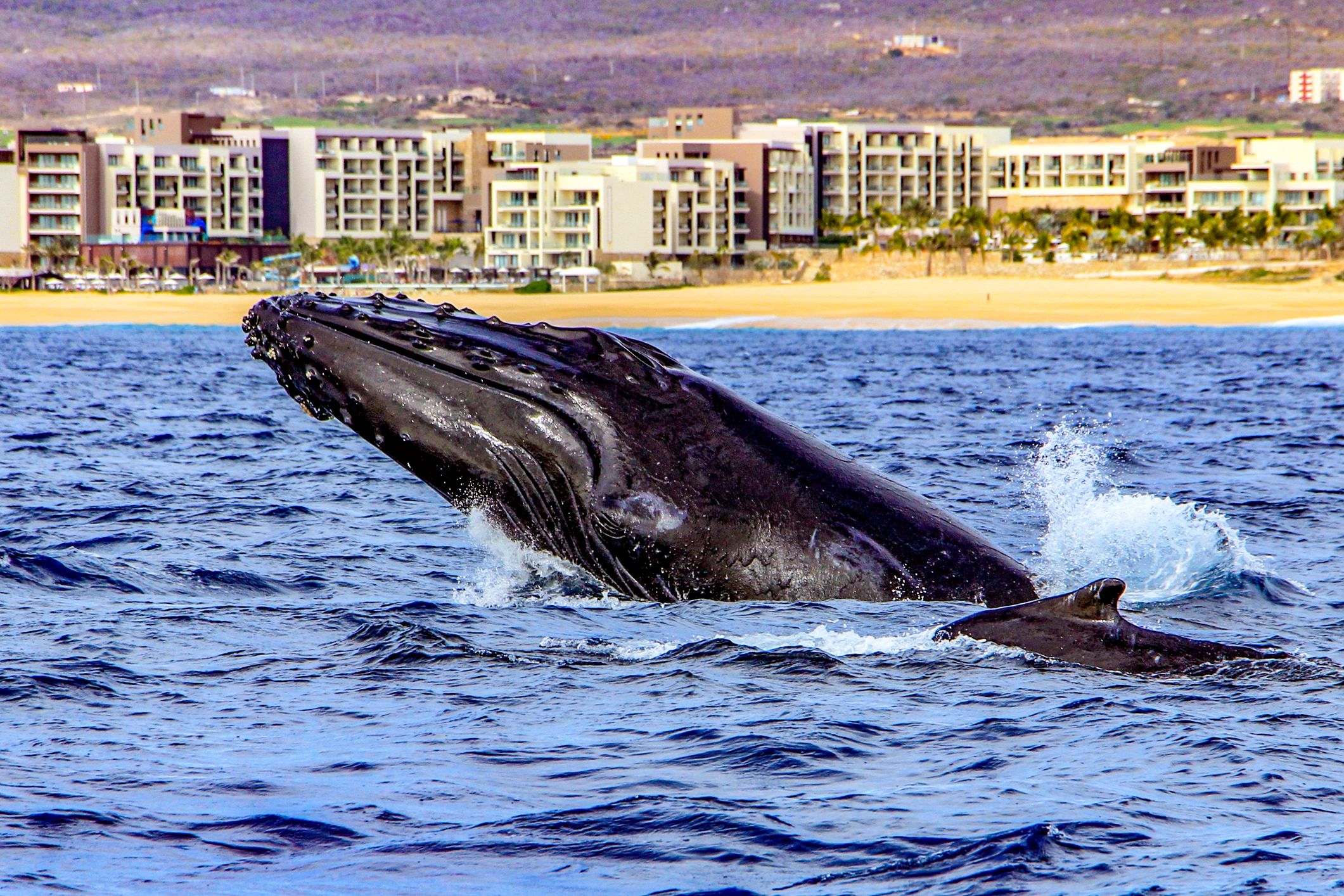
The stars of the show. Humpbacks are the most commonly sighted whale in Cabo, and they are spectacular. They breach (leap completely out of the water), slap their tails and pectoral fins, and sing complex songs that can be heard underwater for miles.
Adult humpbacks reach 40–50 feet long and weigh up to 40 tons. When one breaches next to your boat, you will feel it.
Gray Whales
Gray whales migrate along the Pacific coast and can be spotted in Cabo's waters, though they are more commonly seen further north in the lagoons of Baja California (particularly Laguna San Ignacio and Ojo de Liebre, where they breed).
Blue Whales
The largest animal on earth occasionally passes through Cabo's waters, particularly in the Sea of Cortez. Blue whale sightings are less predictable but unforgettable when they happen.
Orcas (Killer Whales)
Orcas are present in the Sea of Cortez year-round but are most commonly spotted from January through March. Sightings are less frequent than humpbacks but are among the most dramatic wildlife encounters possible.
When Is Whale Watching Season?
December through April is the official whale watching season in Cabo. Here is how it breaks down:
- December: Season opens. Humpbacks begin arriving. Sightings are good and increasing.
- January: Peak month. The highest concentration of humpbacks. Breaching and surface activity is frequent.
- February: Still excellent. Mothers with calves are common — one of the most moving sights in nature.
- March: Great sightings continue. Some whales begin their northward migration.
- April: Season winds down. Sightings become less frequent but still possible.
Outside of this window, whale sightings are rare. If whale watching is a priority, plan your trip between January and March.
Choosing the Right Tour
Boat Size Matters
Small boats (6–12 passengers): The best experience. Smaller boats can maneuver quickly to follow whale activity, get closer to the action, and provide a more personal experience. Your guide can spend time with each passenger.
Medium boats (12–25 passengers): A good balance of intimacy and stability. Most dedicated whale watching tours fall in this category.
Large catamarans (25+ passengers): Less maneuverable and more focused on the social experience than the wildlife. Fine for a general ocean outing, but not ideal if whale watching is your primary goal.
What to Look For in a Tour
Hydrophone: The best tours use an underwater microphone to let you listen to whale song. Hearing a humpback sing while watching it surface is extraordinary.
Knowledgeable guide: A good naturalist guide will explain whale behavior, identify individuals by their tail flukes, and help you understand what you are seeing.
Responsible whale watching: Reputable operators follow guidelines that protect the whales — maintaining safe distances, not chasing or surrounding whales, and limiting engine noise near feeding or resting animals.
Duration: Most whale watching tours run 2–3 hours. Shorter tours (under 2 hours) do not give you enough time on the water to find and observe whales properly.
What to Expect on the Water
Whale watching is wildlife viewing — it is inherently unpredictable. That said, Cabo's whale season is one of the most reliable in the world. Here is a realistic picture of what a tour looks like:
Departure: Most tours leave from the Cabo San Lucas marina in the morning. Morning tours typically have calmer seas and better light for photography.
Finding whales: Your captain and guide will scan the horizon for spouts — the misty exhale that signals a whale at the surface. In peak season, you will often spot multiple spouts within minutes of leaving the marina.
Observation: Once whales are located, the boat will approach slowly and cut the engine. You may drift quietly near a whale for 10–20 minutes, watching it surface to breathe every few minutes.
Breaching: Not every tour sees a breach, but it happens frequently enough that you should have your camera ready at all times. Breaches happen fast — you will hear a splash and look up to see a 40-ton animal airborne.
Tips for a Great Experience
Bring motion sickness medication. Even if you do not usually get seasick, the open ocean can be unpredictable. Take medication the night before and the morning of your tour.
Dress in layers. The sea breeze is cool, especially in the morning. Bring a light jacket even if it looks warm on shore.
Bring a camera with a zoom lens. Your phone camera will capture the experience, but a zoom lens lets you get close-up shots of breaches and tail flukes.
Arrive early. Check in at least 15 minutes before departure. Tours leave on time, and late arrivals may be left behind.
Stay hydrated. Sun and sea air are dehydrating. Bring water and drink it.
Listen to your guide. When a whale is nearby, your guide will direct you to the best viewing position on the boat. Move quickly and quietly.
Photography Tips
Whale photography is challenging but rewarding. A few tips:
- Use burst mode. Breaches happen in under two seconds. Burst mode gives you the best chance of capturing the peak moment.
- Pre-focus on the water surface. Do not wait until you see the whale to focus — by then it is too late.
- Shoot in good light. Morning light is golden and flattering. Midday light is harsh but still workable.
- Do not forget the wide shot. It is tempting to zoom in tight, but a wider shot that shows the whale in context — with the boat, the ocean, or the Cabo coastline — tells a better story.
What to Bring
- Light jacket or windbreaker
- Sunscreen (reef-safe)
- Sunglasses
- Hat
- Camera or phone with a good camera
- Motion sickness medication (taken in advance)
- Water bottle
- Snacks (some tours provide them, but it is good to have your own)
Frequently Asked Questions
Is whale watching guaranteed? No wildlife experience can be guaranteed, but Cabo's whale season is one of the most reliable in the world. The vast majority of tours during peak season (January–March) encounter whales.
Can I get seasick on a whale watching tour? It is possible, especially on rougher days. Take motion sickness medication as a precaution, even if you do not usually get seasick.
Is whale watching safe for children? Yes, whale watching is one of the best family activities in Cabo. Children are often the most enthusiastic whale spotters on the boat.
How far from shore do you go? Most whale watching tours venture 2–10 miles offshore, depending on where the whales are. The Sea of Cortez side tends to be calmer than the Pacific side.
Whale watching in Cabo is one of those travel experiences that stays with you long after you return home. Book your tour early — the best operators fill up weeks in advance during peak season.
Explore Topics
Written by
4 Cabo Fun Team
Content creator and writer sharing insights and stories.