
Whale Watching in Cabo: The Complete Season Guide
When do whales arrive in Cabo San Lucas? Here is everything you need to know about whale watching season, species, and the best tours to book.
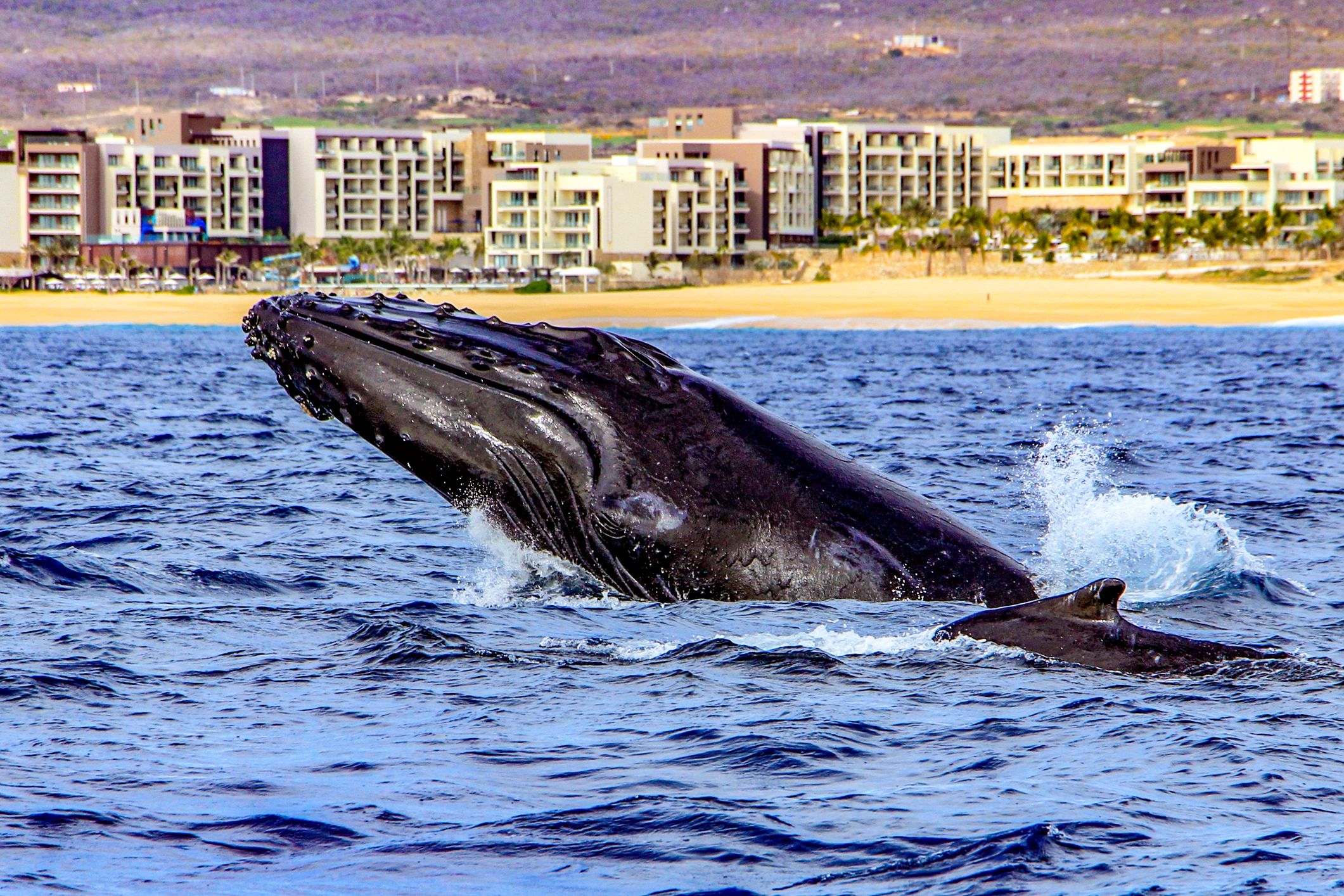
Every winter, one of the most spectacular wildlife events on the planet happens just off the coast of Cabo San Lucas. Thousands of whales migrate to the warm waters of Baja California — and if you time your trip right, you could be watching a 40-ton humpback breach just a few feet from your boat.
Here is everything you need to know about whale watching season in Cabo.
When Does Whale Watching Season Start in Cabo?
Whale watching season in Los Cabos runs from November through April, with peak activity from January through March. This is when you have the best odds of multiple sightings on a single tour.
Here is a quick breakdown by month:
- November–December: Humpbacks begin arriving. Sightings are frequent but not yet at peak density.
- January–March: Peak season. Humpbacks are everywhere, and gray whales are active in the lagoons further north. This is the best time to go.
- April: Season winds down. Sightings are still possible but less frequent as whales begin heading north.
The good news? Even in the shoulder months of November and April, whale sightings are common enough that most tour operators offer a guarantee — if you don't see a whale, you get a free return trip.
What Whales Will You See in Cabo?
Humpback Whales
Humpbacks are the stars of the show in Cabo. These are the whales you see in all the dramatic photos — breaching completely out of the water, slapping their massive pectoral fins on the surface, and singing their haunting songs underwater.
Humpbacks come to the warm waters of the Sea of Cortez and the Pacific side of Baja to breed and give birth. They spend the summer feeding in cold Alaskan and North Pacific waters, then make the 3,000-mile journey south every winter.
You can often hear them singing through the hull of the boat — some tour operators even use hydrophones so you can listen in real time.
Gray Whales
Gray whales are a different experience entirely. They migrate to the protected lagoons of Baja California — particularly Laguna Ojo de Liebre and Laguna San Ignacio, a few hours north of Cabo — where they give birth and nurse their calves in shallow, calm water.
What makes gray whales unique is how friendly they are. In these lagoons, mother gray whales will actually approach small boats and allow people to touch them. It is one of the most extraordinary wildlife encounters on earth.
From Cabo, you can take a day trip to these lagoons during peak season (January–March).
Blue Whales
The Sea of Cortez is also home to blue whales — the largest animals ever to have lived on Earth. Sightings are less predictable than humpbacks, but they do occur, particularly in the deeper waters of the Sea of Cortez. If you see one, consider yourself very lucky.
Where Do the Tours Go?
Most whale watching tours out of Cabo depart from the marina and head into the Pacific Ocean or the Sea of Cortez, depending on where whales have been spotted that day. The area around Land's End — the famous arch at the tip of the Baja peninsula — is a particularly productive area.
Tours typically last 2–3 hours. Experienced captains track whale activity daily and know exactly where to find them.
What to Expect on a Whale Watching Tour
You will likely see multiple whales. During peak season, it is common to spot 5–15 individual whales on a single tour. Breaches, tail slaps, and spy-hops (when a whale pokes its head straight up out of the water) are all common behaviors.
Bring layers. It can be surprisingly cool on the water in the early morning, even in Cabo. A light jacket is a good idea, especially for morning departures.
Morning tours are best. The ocean is typically calmer in the morning, which means a smoother ride and better visibility. Afternoon winds can pick up, making the water choppier.
Bring motion sickness medication if you need it. Even on calm days, being on a small boat in open ocean can affect some people. Take medication before you board, not after you start feeling sick.
Respect the whales. Responsible tour operators follow strict guidelines about how close boats can approach. This protects the whales and actually leads to better encounters — whales that feel safe are more likely to approach the boat on their own.
Private vs. Group Whale Watching Tours
Group tours are a great value and a social experience. You share the boat with other travelers, and the energy when a whale breaches nearby is electric. These tours typically run 2–3 hours and include a naturalist guide.
Private tours give you the flexibility to spend more time in productive areas, move at your own pace, and have the experience entirely to yourself (or your group). If you are celebrating a special occasion or traveling with family, a private whale watching charter is worth every penny.
Can You See Whales from Shore?
Yes — during peak season, you can sometimes spot humpbacks from the beach or from the cliffs near Land's End. But nothing compares to being on the water. The scale of these animals only becomes real when you are close enough to hear them breathe.
Book Early — Tours Fill Up Fast
January and February are the busiest months in Cabo, and whale watching tours are one of the most popular activities. If you are visiting during peak season, book your tour as early as possible. Last-minute availability is limited, especially for private charters.
Ready to see whales? Browse our whale watching tours and find the right experience for your group — from shared boats to fully private charters with hydrophones and expert naturalist guides.
Explore Topics
Written by
4 Cabo Fun Team
Content creator and writer sharing insights and stories.


